
Adults seeking smile improvements face an important choice between clear braces and porcelain veneers. Clear braces gradually move teeth into better positions through orthodontic force, while veneers instantly transform appearance by covering tooth surfaces with custom shells.
Clear braces vs veneers, Brooklyn patients consider, depends on whether alignment problems or cosmetic concerns dominate their smile dissatisfaction, with each treatment excelling in different situations.
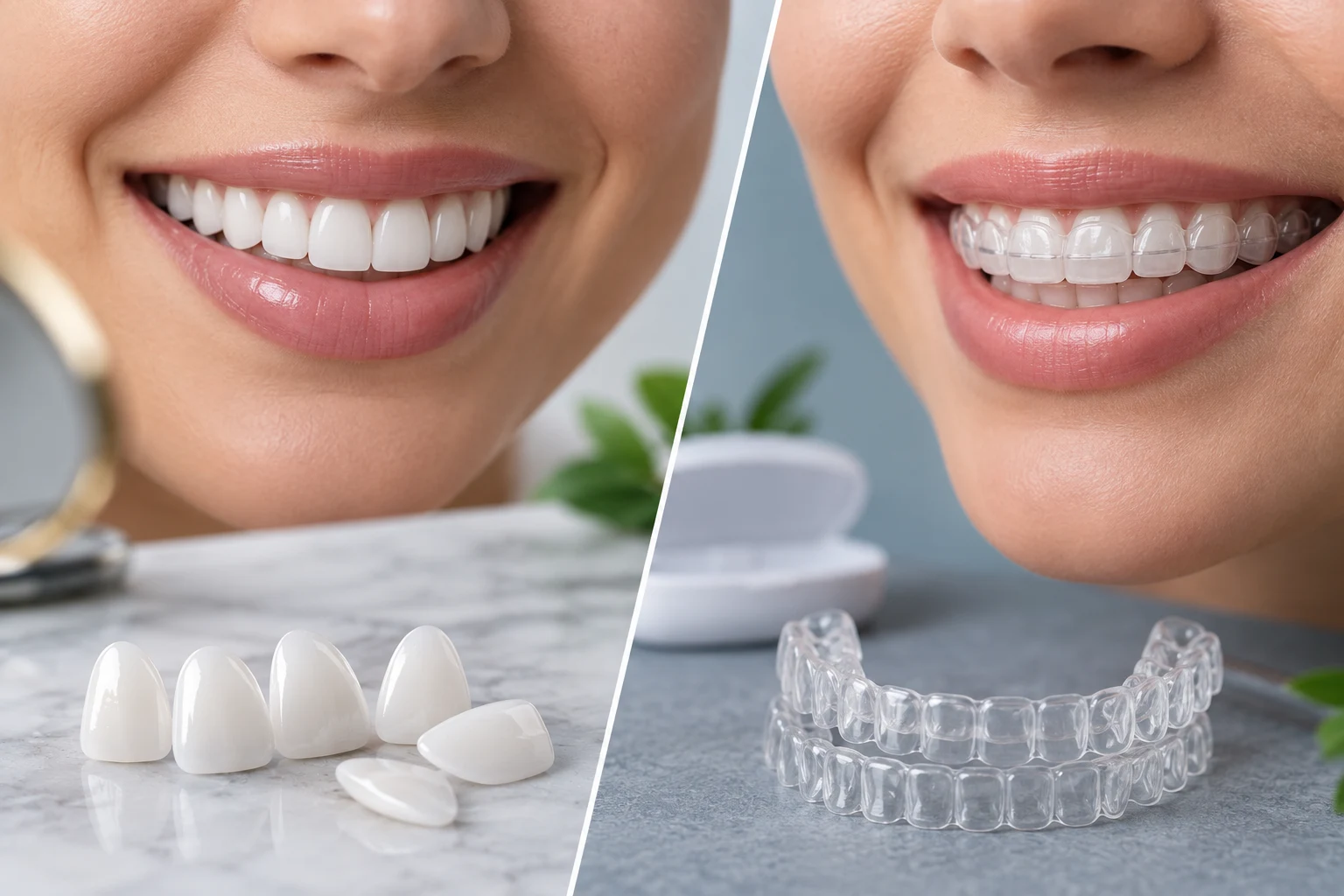
Clear braces, often called clear aligners, use transparent plastic trays that fit over teeth and gradually shift them into proper positions through gentle, controlled force. Adults wear a series of custom aligners, switching to new trays every one to two weeks as teeth move incrementally toward the desired alignment.
These removable appliances straighten teeth discreetly without metal brackets or wires, making them popular among professionals and adults who want orthodontic correction without visible hardware.
Treatment addresses crowding, spacing, overbites, underbites, and crossbites by actually changing tooth positions rather than just covering cosmetic concerns. The process preserves natural teeth while correcting structural problems that affect both appearance and function.
Porcelain veneers are thin shells of dental ceramic permanently bonded to front tooth surfaces to change their appearance instantly. Dentists remove a small amount of enamel from teeth receiving veneers, then bond custom-fabricated porcelain shells that cover visible tooth surfaces with new color, shape, and size.
Veneers transform smiles in just two appointments, addressing multiple cosmetic concerns simultaneously without the months or years orthodontics requires. They correct discoloration resistant to whitening, repair chips and cracks, close small gaps, make teeth appear straighter, and create uniform size and shape across your smile.
Unlike clear braces that move natural teeth, veneers work by covering existing teeth with cosmetic restorations.
| Factor | Clear Braces | Veneers |
| Treatment Time | 6 to 18 months typically | 2 to 3 weeks (2 appointments) |
| Cost Range | $3,000 to $8,000 for full treatment | $1,000 to $2,500 per tooth |
| Reversibility | Reversible orthodontic movement | Permanent tooth alteration |
| What They Fix | Tooth position and alignment | Cosmetic appearance only |
| Daily Maintenance | Remove for eating/cleaning | Brush and floss normally |
| Expected Longevity | Permanent results with retainer use | 10 to 15 years before replacement |
| Tooth Preparation | No tooth alteration required | Enamel removal necessary |
| Insurance Coverage | Sometimes 50% if functional | Rarely covered (cosmetic) |
Clear braces work best when the actual tooth position creates your smile concerns rather than just cosmetic appearance issues. Orthodontic treatment corrects structural problems that veneers cannot address, providing results that improve both function and aesthetics through natural tooth movement.
Veneers excel at transforming smiles quickly when tooth positions are acceptable, but cosmetic concerns dominate. They address multiple aesthetic issues simultaneously through instant coverage rather than gradual tooth movement over months.
Clear braces correct common alignment issues like crowding gaps bite problems and uneven spacing while improving comfort confidence and everyday oral function.
Crowded Teeth: Overlapping teeth that don’t have enough space in your jaw get straightened as clear aligners gradually create room and shift each tooth into proper position.
Gapped Teeth: Spaces between teeth close through controlled orthodontic movement that brings teeth together while maintaining proper bite relationships throughout your mouth.
Overbite: Upper front teeth that protrude too far over lower teeth get corrected as aligners reposition teeth vertically and horizontally to achieve ideal overlap.
Underbite: Lower teeth that sit in front of upper teeth when you bite get repositioned to proper alignment, improving both function and facial profile.
Crossbite: Misaligned bites where some upper teeth sit inside lower teeth get corrected through tooth movement that establishes proper upper-lower relationships across your entire bite.
Open Bite: Front teeth that don’t meet when back teeth close together get repositioned so all teeth contact properly during biting and chewing motions.
Veneers improve the look of teeth affected by stains, chips, gaps, minor misalignment, and uneven shapes, creating a brighter, more balanced smile.
Permanent Staining: Discoloration from medications, fluorosis, or deep stains that professional whitening can’t remove gets covered with bright white porcelain matching your desired shade.
Chips and Cracks: Damaged tooth edges and surface cracks disappear under porcelain veneers that restore a smooth, intact appearance to compromised teeth without crowns.
Worn Teeth: Teeth shortened from grinding or acid erosion regain proper length and shape through veneers that rebuild lost structure cosmetically.
Uneven Tooth Size: Teeth that appear too small, too large, or inconsistent in size get reshaped through veneers, creating uniform, proportional dimensions across your smile.
Minor Spacing Issues: Small gaps between properly aligned teeth close instantly as veneers add width to tooth surfaces, eliminating spaces without orthodontic movement.
Misshapen Teeth: Teeth with irregular shapes, pointed edges, or disproportionate form get transformed through custom veneers designed to ideal aesthetic proportions.
Clear braces for complete treatment typically range from $3,000 to $8,000 in Brooklyn, with costs varying based on case complexity and treatment duration. Simple cases requiring minor corrections cost less than complex situations involving significant tooth movement or bite correction. Most patients need treatment on both upper and lower arches, though some cases involve just one arch at reduced cost.
Porcelain veneers cost $1,000 to $2,500 per tooth in Brooklyn, with total expense depending on how many teeth you want transformed. Most patients veneer 6 to 10 front teeth visible when smiling, creating total costs of $6,000 to $25,000 for complete smile makeovers. Premium materials, experienced cosmetic dentists, and complex cases increase per-tooth costs within this range.
Clear braces require 6 to 18 months for most adult cases, with simple alignment taking less time than complex bite correction. Patients wear aligners 20 to 22 hours daily, removing them only for eating and cleaning. Treatment progresses gradually through a planned series of aligner trays, with each tray worn for one to two weeks before advancing to the next stage.
Porcelain veneers transform smiles in two to three weeks, with just two office appointments required. The first visit involves tooth preparation, impressions, and temporary veneers placement. Two weeks later, permanent veneers are bonded to teeth during a second appointment lasting about two hours. Results appear instantly once final veneers are placed, with no waiting for gradual changes to develop over time.
Many patients benefit from combining clear braces and veneers for optimal smile transformation. Orthodontic treatment first corrects tooth positions and bite problems that veneers cannot address, creating ideal tooth alignment.
After completing clear braces and achieving proper tooth positions, veneers can then address remaining cosmetic concerns like color, chips, or size inconsistencies. This combination approach provides both structural correction and aesthetic perfection, though it extends total treatment time and increases overall costs beyond either treatment alone.
Assess Your Primary Concern: Determine whether tooth position or cosmetic appearance bothers you most. Crooked teeth need orthodontics, while discolored straight teeth benefit from veneers.
Consider Your Timeline: Evaluate whether you can commit to months of aligner wear or need immediate results for upcoming events requiring a quick smile transformation.
Evaluate Your Budget: Compare total costs for treatments addressing your specific concerns. Sometimes, treating fewer teeth with veneers costs less than full orthodontic treatment.
Think About Permanence: Decide whether you prefer reversible tooth movement or permanent tooth alteration. Veneers require replacing eventually, while orthodontic results last indefinitely with retainer use.
Review Your Oral Health: Healthy teeth and gums support both treatments, but certain conditions favor one approach. Discuss limitations with your dentist during consultation.
Consider Insurance Coverage: Check whether your dental insurance covers orthodontics for functional problems but excludes cosmetic veneers, affecting out-of-pocket costs.
Choosing between clear braces and veneers requires professional evaluation of your teeth, bite, cosmetic concerns, and personal goals. During consultation, Dr. Ghannoum examines your smile, discusses what bothers you most, and explains which treatment addresses your specific situation most effectively.
Digital imaging sometimes shows projected results for both approaches, helping you visualize outcomes before committing to treatment. Our team provides honest recommendations based on clinical benefits rather than pushing expensive treatments you don’t need.
Veneers create the appearance of straighter teeth by covering them with aligned porcelain shells, but they don’t actually move tooth positions or correct bite problems like orthodontics does.
Clear braces cost $3,000 to $8,000 total, while veneers cost $1,000 to $2,500 per tooth. Treating 6 to 8 teeth with veneers often costs more than complete orthodontic treatment.
Yes, clear braces work excellently for adults, with success rates matching traditional braces for most alignment and bite correction cases requiring tooth movement.
Porcelain veneers typically last 10 to 15 years before needing replacement. Proper care, avoiding hard foods, and not grinding teeth extend veneer longevity.
Absolutely. Many patients use orthodontics first to position teeth correctly, then add veneers afterward to perfect color, size, or minor shape concerns remaining after alignment.
Clear braces excel at correcting tooth positions and bite problems through gradual orthodontic movement, while veneers instantly transform appearance by covering teeth with custom porcelain.
Your choice depends on whether structural alignment or cosmetic appearance concerns dominate your smile dissatisfaction, with professional evaluation revealing which approach addresses your specific situation most effectively.

Not sure whether clear braces or veneers are right for you? Call New Wave Dentistry at (718) 491-5666 to schedule a consultation and find the best option for your smile.